Visual Original Customs · Selected works

Sculpture portfolio

Cultural heritage monuments, civic landmarks, and restoration — five works exploring how sculpture preserves collective memory and gives community identity a lasting public presence.

Derrick J. Monk · The practice

Public sculpture as cultural preservation.

Derrick J. Monk: Preserving Culture Through Public Art

Derrick J. Monk is a public artist, sculptor, educator, and cultural preservationist whose work transforms community histories, shared values, and artistic legacies into enduring public landmarks. Through Visual Original Customs, Monk combines historical research, community engagement, traditional metal-casting techniques, contemporary fabrication, and interpretive storytelling to create and restore artworks that honor the people and experiences shaping local identity.

His projects span civil rights commemoration, civic participation, intergenerational connection, artistic conservation, and the interpretation of African American cultural history. From the 43 Trailblazers Memorial in St. Charles Parish, Louisiana, to the restoration of Mr. Imagination’s public artwork in Winston-Salem, North Carolina, Monk’s work demonstrates that cultural preservation encompasses both the recognition of historic contributions and the continued care of creative expressions already embedded in public life.

A defining feature of his approach is the understanding that public art can serve as more than a visual landmark. It can be a gathering place, an educational resource, a record of community experience, and a bridge between generations. By involving community members and students in selected projects, Monk creates opportunities for people to participate in the preservation process itself, connecting historical knowledge with artistic practice and shared responsibility.

His sculptures affirm the importance of remembering honestly, celebrating collective achievement, protecting artistic legacies, and making cultural heritage accessible beyond the walls of traditional cultural institutions. Through enduring materials and community-centered storytelling, Derrick Monk advances a vision of public art in which each landmark contributes to a larger legacy of remembrance, belonging, and cultural continuity.

At the heart of this practice is a commitment to ensuring that the stories shaping a community are not lost to time, but remain visible, meaningful, and available to inspire generations yet to come.

Preserving stories
Recognizing overlooked histories, creative traditions, and the people who shaped a community.
Connecting generations
Sharing knowledge through participation, craftsmanship, and historical learning.
Honoring place
Creating and caring for landmarks rooted in local identity and everyday public life.

Landmarks & cultural significance

Five approaches to preservation
01

43 Trailblazers Memorial

Location: St. Charles Parish Public Schools Central Office, Luling, Louisiana | Dedicated September 23, 2026 | Artist: Derrick Monk

Flagship case study

A landmark of courage, educational opportunity, and intergenerational remembrance.

Preserve the 43 · Documentary
Civil rights heritage
Preserves a local chapter of school desegregation history within the wider American civil rights movement.
Educational preservation
Creates a physical learning resource for students, educators, families, and visitors.
Intergenerational legacy
Integrates student-created castings into the memorial, connecting present-day learners with historical trailblazers.
Community identity
Recognizes the people whose courage helped shape St. Charles Parish and its public schools.
Living historical record
Connects the permanent monument with oral histories, documentary work, curriculum development, and archival preservation.

Cultural preservation

The 43 Trailblazers Memorial stands as a permanent tribute to the courage, determination, and historic contributions of approximately 43 Black students who volunteered to transfer to previously all-white schools in St. Charles Parish, Louisiana, during the 1965–66 school year. At a pivotal moment in the nation's civil rights history, these young people confronted threats, insults, and mistreatment as they helped advance school desegregation. Their decision opened doors for subsequent generations and became a defining chapter in the educational and cultural history of their community.

Created by Derrick Monk and commissioned by St. Charles Parish Public Schools, the memorial transforms this local history into a lasting public landmark. Bronze sculptural elements, architectural forms, interpretive story panels, and brass name plaques establish a tangible record of the students' experiences and contributions. The inclusion of their names gives individual recognition to people whose actions helped change the course of public education, ensuring that their legacy is not reduced to a distant historical event or an abstract account of the civil rights movement.

Read the full cultural story

The memorial's cultural importance extends beyond commemoration. It creates a place where families can see their history acknowledged, former students can reconnect with a formative chapter of their lives, and younger generations can encounter the courage of those who came before them. Its location within the public school system is especially meaningful: the institution that serves today's students becomes a setting for learning about the people whose experiences helped shape access to education.

A defining feature of the project is the participation of contemporary students in its creation. Through metal-casting workshops, students designed elements in foam that were subsequently cast in metal and incorporated into the memorial's benches. This process connects artistic practice with historical learning, allowing young people to contribute physically to a monument honoring earlier generations. The memorial therefore preserves culture not only through what it depicts, but through the act of passing knowledge, skills, and responsibility from one generation to another.

The memorial also serves as the physical anchor of the broader Preserve the 43 initiative, which brings together the monument, documentary storytelling, educational curriculum, and a developing historical archive. These complementary efforts recognize that a landmark alone cannot preserve every voice or detail of a community's past. First-person testimony, family photographs, historical documents, and classroom resources can deepen the public's understanding and help protect the story for future generations.

Ultimately, the 43 Trailblazers Memorial represents the power of ordinary people to create extraordinary historical change. It affirms the dignity of the students who took those courageous first steps, preserves their place in the history of Louisiana education, and establishes an enduring point of reflection for the wider community. It is both a monument to the past and a commitment to the future: a reminder that educational opportunity, civic courage, and cultural memory are legacies that must be actively protected and shared.

A landmark of courage, educational opportunity, and intergenerational remembrance—preserving the stories of the 43 Trailblazers so their contributions continue to inform and inspire generations to come.
02

Standing with Strength and Courage

Location: Durham County Board of Elections, Durham, North Carolina | Year: 2026 | Materials: 316L stainless steel, powder-coated aluminum, and brass

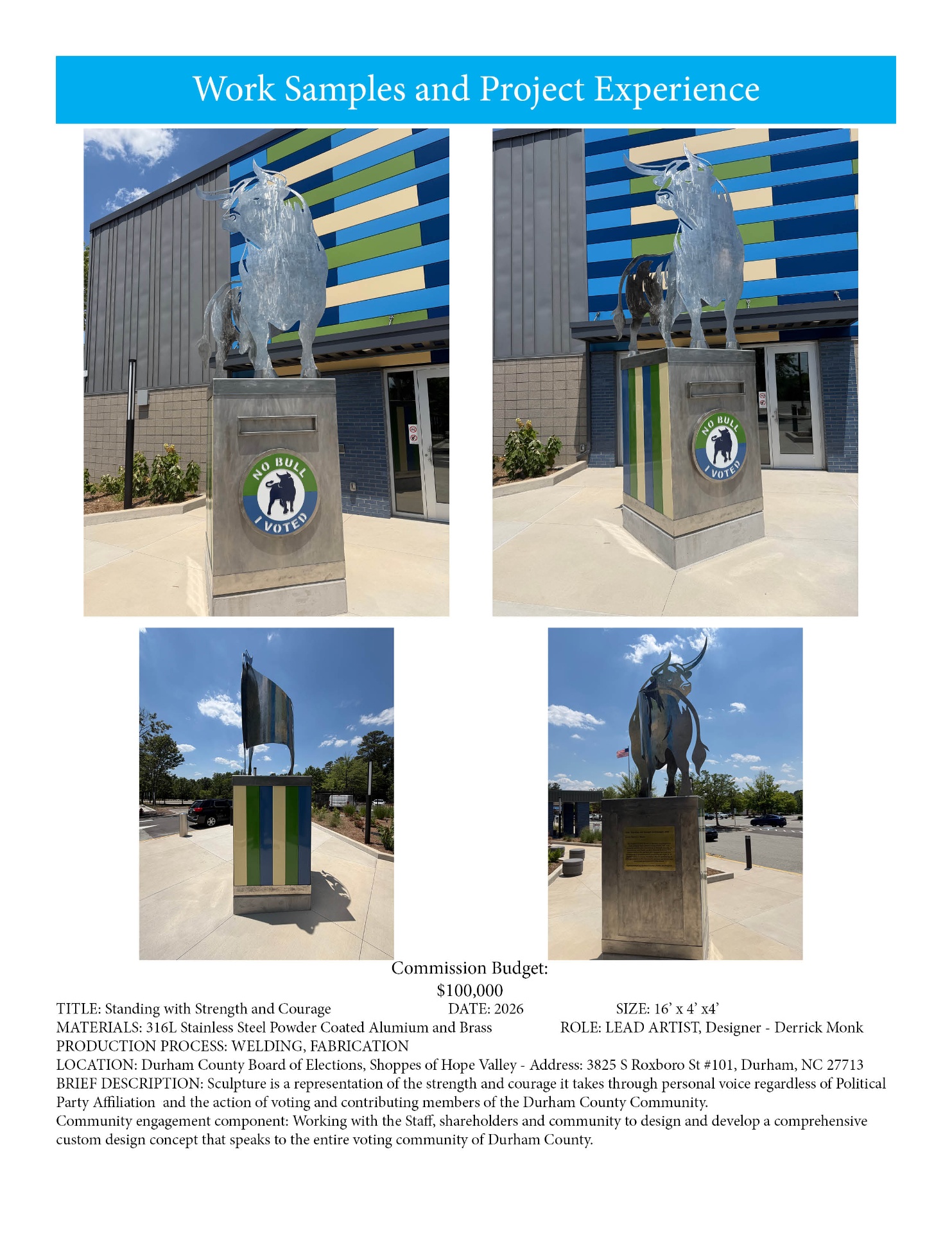
Standing with Strength and Courage — sculpture and project documentation
Standing with Strength and Courage · Derrick J. Monk
Civic heritage
Connects a contemporary elections facility with the enduring history of democratic participation.
Community representation
Reflects public input from voters, election workers, and county stakeholders.
Intergenerational education
Offers a point of departure for conversations about voting rights, civic responsibility, and democratic history.
Public identity
Establishes a visible civic landmark within Durham County's electoral infrastructure.
Cultural continuity
Encourages residents to view civic participation as an ongoing responsibility shared across generations.

Cultural preservation

Standing with Strength and Courage is a civic monument by Derrick Monk that honors the strength, conviction, and personal responsibility involved in exercising the right to vote. Installed at the Durham County Board of Elections, the sculpture gives a visible and lasting presence to a fundamental principle of democratic life: that participation in the electoral process is an expression of individual agency and shared civic responsibility, regardless of political affiliation.

The sculpture's cultural significance is closely connected to Durham's place within the broader history of African American civic participation, community organizing, and the struggle for equal access to democratic institutions. Its location at an elections facility gives the artwork a direct relationship to the public responsibilities carried out there. Rather than treating voting as merely an administrative procedure, the monument invites residents to recognize the people, perseverance, and historical struggles that have helped establish and protect access to the ballot.

Read the full cultural story

From a cultural preservation perspective, the sculpture offers an opportunity to connect the present-day act of voting with the larger history of civic participation in the United States. The right to vote has not always been equally accessible, and communities have worked across generations to challenge exclusion, overcome barriers, and expand participation. The monument provides a physical setting in which those broader histories can be considered alongside the everyday responsibilities of contemporary citizenship.

Monk's use of stainless steel, powder-coated aluminum, and brass gives the work a durable material presence appropriate to an outdoor civic setting. The combination of materials also reflects the technical and collaborative process behind contemporary public art. According to Visual Original Customs, public input sessions with voters, poll workers, and county stakeholders informed the monument's imagery and message. That engagement strengthens the work's connection to the community it serves, making public participation part of the artwork's development as well as its subject.

As a public landmark, Standing with Strength and Courage can serve as a point of reflection for first-time voters, longtime residents, election workers, students, and visitors. Its message extends beyond a particular election or political moment. It recognizes that civic institutions depend on people willing to participate, that democratic rights carry historical significance, and that the preservation of civic culture requires ongoing engagement.

The sculpture ultimately frames voting as both a personal act of courage and a collective expression of belonging. By placing this message within a public institution, Monk helps create a lasting visual reminder that the strength of a community is connected to the participation of its people and the preservation of the rights through which they shape their shared future.

A lasting tribute to civic courage and democratic participation, honoring the strength of individuals and the shared responsibility of communities to protect and exercise the right to vote.

03

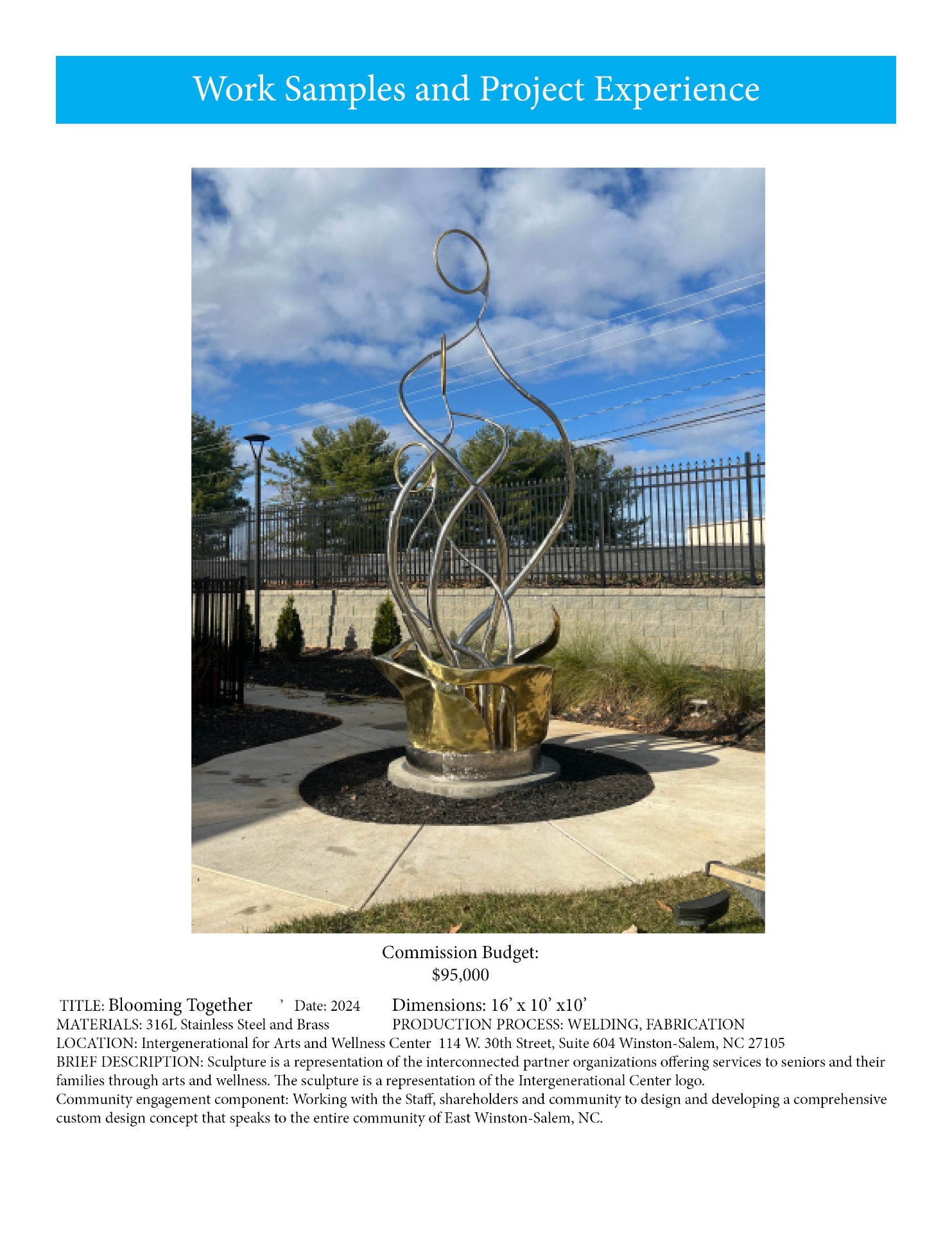
Blooming Together

Location: Intergenerational Center for Arts & Wellness, Winston-Salem, North Carolina | Year: 2024 | Materials: 316L stainless steel and brass

Blooming Together — sculpture and project documentation
Blooming Together · Derrick J. Monk
Intergenerational heritage
Celebrates the exchange of knowledge, memories, traditions, and experiences between generations.
Community identity
Reflects the shared mission of organizations serving seniors, families, and the wider community.
Arts and wellness
Connects creative expression with belonging, social connection, and well-being.
Collaborative placemaking
Incorporates community workshops into the development of the artwork's symbolism.
Living culture
Recognizes cultural preservation as an ongoing process of participation, learning, and shared growth.

Cultural preservation

Blooming Together is a monumental outdoor sculpture by Derrick Monk that celebrates the connections among generations and the role of arts and wellness in creating stronger, more connected communities. Created for the Intergenerational Center for Arts & Wellness in Winston-Salem, the work represents the shared growth that can emerge when older adults, families, community organizations, and younger generations come together in a supportive environment.

The sculpture's floral inspiration offers a meaningful framework for interpreting cultural preservation. A bloom develops through a process of growth, care, and connection to its surrounding environment. In a similar way, a community's cultural identity is sustained through relationships, shared experiences, traditions, and opportunities for people of different ages to learn from one another. The sculpture's title emphasizes that growth need not happen in isolation: people and organizations can flourish together while maintaining the distinct experiences and contributions each brings to the community.

Read the full cultural story

The artwork's location within an intergenerational arts and wellness campus is central to its significance. Here, public art becomes part of an environment dedicated to human connection and well-being. It helps give physical expression to the idea that cultural vitality is not confined to museums, archives, or historic buildings. It also lives in the relationships between grandparents and grandchildren, in creative activities shared across age groups, in community programs, and in the everyday exchanges through which knowledge and traditions are passed on.

Community engagement was an important part of the sculpture's development. Visual Original Customs reports that workshops with seniors, families, and partner organizations informed the floral forms and their symbolism. The resulting work therefore reflects a collaborative approach to public art, in which the people connected to a site help shape the meaning of its landmark.

Crafted from stainless steel and brass, Blooming Together brings the visual language of organic growth into a durable sculptural form. Its substantial scale establishes a recognizable focal point on the center's grounds, while its floral theme provides an accessible point of connection for people with different backgrounds and life experiences. As visitors encounter the work, it can encourage reflection on the importance of care, resilience, inclusion, and the relationships that allow individuals and communities to thrive.

The sculpture also helps preserve an understanding of culture that is dynamic rather than static. Cultural heritage is not simply something inherited from the past; it is something communities continue to create through shared practices and meaningful encounters. By celebrating collaboration among generations, the work acknowledges older adults as carriers of experience and memory while recognizing younger people and families as essential contributors to the community's continuing evolution.

Ultimately, Blooming Together positions the public artwork as a symbol of belonging and collective flourishing. It reinforces the value of spaces where creativity, wellness, and intergenerational relationships intersect, while contributing to Winston-Salem's public cultural landscape through a landmark designed to welcome, connect, and inspire.

A sculptural celebration of intergenerational connection, expressing how communities flourish when creativity, wellness, shared experience, and care bring people together.

04

Mr. Imagination Wall Restoration

Location: WSTA Bus Station, Winston-Salem, North Carolina | Restoration: 2021 | Materials: Ferro-cement and mixed found objects

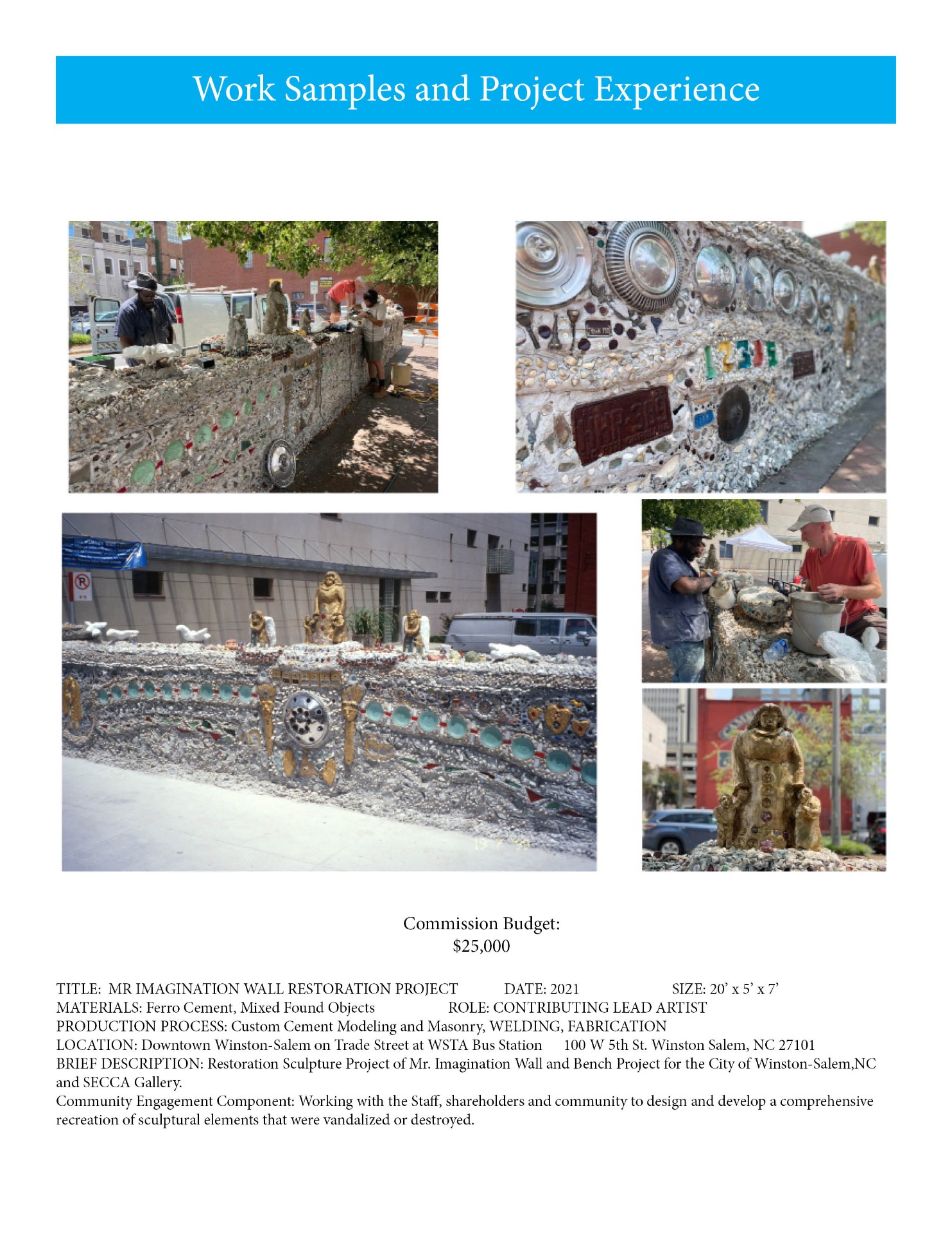
Mr. Imagination Wall Restoration — sculpture and project documentation
Mr. Imagination Wall Restoration · Derrick J. Monk
Artistic legacy
Preserves a public work by Gregory Warmack, known as Mr. Imagination.
Conservation and stewardship
Demonstrates the importance of maintaining existing cultural assets rather than allowing them to deteriorate or disappear.
Everyday public access
Keeps art present in a transit environment used by the broader community.
Community participation
Engages volunteers and local artists in the preservation process.
Creative heritage
Celebrates the transformation of found objects into meaningful artistic expressions.

Cultural preservation

The Mr. Imagination Wall Restoration represents a vital commitment to preserving existing cultural heritage and protecting the creative contributions of artists whose work has become part of a community's shared identity. Led in part by Derrick Monk, the 2021 restoration renewed a distinctive public wall and bench created by the late artist Gregory Warmack, widely known as Mr. Imagination. Undertaken in partnership with the City of Winston-Salem and the Southeastern Center for Contemporary Art (SECCA), the project helped return an important piece of local public art to everyday community life.

Mr. Imagination was known for his imaginative use of found and repurposed materials, transforming ordinary objects into expressive works of art. His approach challenged conventional boundaries between fine art, folk art, everyday materials, and public creativity. By incorporating found objects into an artistic composition, his work demonstrated how items that might otherwise be discarded could acquire new meaning through the artist's vision and craftsmanship. The Winston-Salem wall and bench reflect this resourceful, material-rich approach, making their preservation significant not only for the physical objects themselves but also for the artistic philosophy they represent.

Read the full cultural story

The restoration's location at the WSTA bus station adds another dimension to its cultural value. A transit station is a place of daily movement, where residents from different backgrounds pass through, gather, wait, and connect with the wider city. Preserving a work of art in this setting keeps it accessible beyond the boundaries of a conventional gallery. The artwork remains connected to the rhythms of everyday life, allowing public art to function as a shared civic resource rather than an experience available only to those who seek out cultural institutions.

The project also illustrates an essential principle of historic and cultural preservation: maintaining a work's meaning requires more than retaining its original materials. Restoration must respect the artistic intent, character, and material language of the original creation. Visual Original Customs describes the work as involving ferro-cement repairs and the resetting or replacement of found-object inlays in keeping with the original artist's intent. Community volunteers and local artists also participated in restoration days, reconnecting residents with the artwork and the process of caring for it.

Monk's contribution highlights the importance of skilled craftsmanship and collaborative stewardship in the preservation of public art. The work of restoration can be less immediately visible than the creation of a new monument, yet it is essential to ensuring that cultural landmarks remain meaningful, accessible, and physically sound. It also acknowledges that the preservation of an artist's legacy often depends on partnerships among public agencies, cultural organizations, artists, and residents.

The Mr. Imagination Wall Restoration consequently stands as an example of cultural continuity through conservation. It protects an artwork that reflects an individual artist's imagination while safeguarding a shared part of Winston-Salem's public environment. Rather than allowing the work to become a fading memory, the restoration reinforces the idea that existing public art deserves attention, investment, and long-term care.

Its deeper message is that communities preserve their identities not only by commissioning new monuments, but also by protecting the creative expressions already embedded in their public spaces. Through this project, Monk's restoration work contributes to the continued visibility of Mr. Imagination's artistic legacy and affirms the lasting cultural value of imaginative, community-accessible art.

A renewed commitment to cultural stewardship, preserving Mr. Imagination's distinctive artistic legacy and ensuring that a cherished work of public art remains part of Winston-Salem's everyday life.

05

In the Face of Strange Fruit

Location: Cultural Arts Center, Greensboro, North Carolina | Year: 2007 | Medium: Lost-wax cast bronze

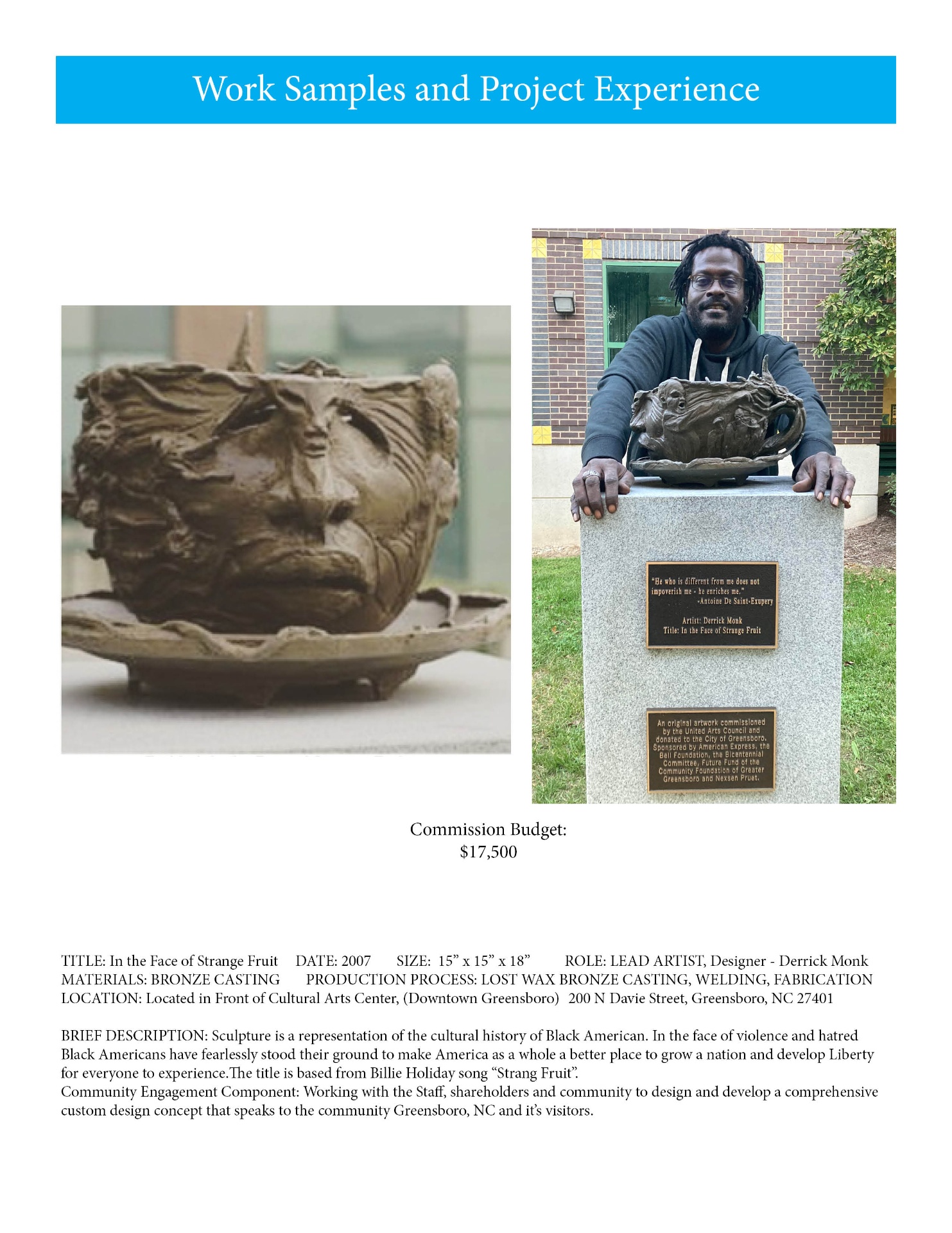
In the Face of Strange Fruit — sculpture and project documentation
In the Face of Strange Fruit · Derrick J. Monk
African American cultural heritage
Connects contemporary sculpture with the history of Black American artistic expression and resistance.
Historical remembrance
References the history of lynching through the cultural legacy of Billie Holiday's Strange Fruit.
Art as testimony
Demonstrates how sculpture can preserve difficult histories and encourage informed dialogue.
Cultural education
Offers opportunities for discussion across visual art, music history, racial justice, and public memory.
Intergenerational responsibility
Reinforces the importance of preserving historical knowledge for future generations.

Cultural preservation

In the Face of Strange Fruit is a bronze sculpture by Derrick Monk that confronts the cultural history of Black America through the enduring legacy of racial violence, historical memory, artistic resistance, and the pursuit of justice. Created in 2007 for the Cultural Arts Center in Greensboro, North Carolina, the work takes its title from Billie Holiday's landmark interpretation of Strange Fruit, the 1939 protest song that brought the horror of lynching in America into public consciousness.

The cultural importance of the sculpture begins with its reference to a work of music that became a powerful expression of protest against racial terror. Billie Holiday's performance of Strange Fruit confronted audiences with the brutal reality of lynching and the violence directed against Black Americans. The National Museum of African American History and Culture identifies the song as one that many scholars consider among the earliest protest songs of the civil rights movement. Its enduring significance lies in the way artistic expression can document painful history, challenge silence, and compel audiences to confront realities that society may otherwise seek to avoid.

Read the full cultural story

By drawing on this cultural reference, Monk situates his sculpture within a wider tradition of Black artistic expression that uses creative work to preserve memory and bear witness to injustice. The title signals a subject that requires historical awareness and reflection rather than passive observation. It invites viewers to consider how the memory of racial violence is carried through music, visual art, storytelling, and the public recognition of difficult chapters in American history.

The sculpture's presence at Greensboro's Cultural Arts Center gives this subject a setting in which artistic expression and cultural dialogue intersect. As an artwork associated with a cultural institution, it offers an opportunity to explore how art can preserve histories that extend beyond written records. Music, sculpture, and other forms of cultural production can communicate emotional and human dimensions of the past, helping subsequent generations understand not only what happened but also why remembrance matters.

Executed in bronze through the lost-wax casting process, In the Face of Strange Fruit also reflects the enduring material qualities of sculpture as a medium for cultural preservation. The casting process transforms an original sculpted form into a durable object capable of surviving beyond the moment of its creation. Monk's work encompasses the sculpting, mold-making, casting, and patination of the bronze, demonstrating a close relationship between artistic interpretation and technical craftsmanship.

Its cultural significance is not limited to historical reference. The sculpture can also support contemporary conversations about memory, justice, racial equality, and the responsibilities of cultural institutions to preserve difficult histories with care and integrity. By making a reference to racial violence through a work of visual art, Monk creates an opportunity for reflection that can cross generations and disciplinary boundaries. Visitors can engage with the work through the lens of music history, African American cultural heritage, public art, or the broader role of remembrance in civic life.

Importantly, preserving such histories does not mean defining a community solely through its experiences of suffering. It also recognizes the courage, creativity, cultural contributions, and determination of the people whose experiences shaped that history. The artistic tradition represented by Billie Holiday's performance and Monk's sculptural response demonstrates how cultural expression can transform remembrance into a lasting form of testimony.

In the Face of Strange Fruit therefore stands as a meditation on the relationship between art and historical truth. It affirms that cultural preservation must include difficult histories alongside stories of achievement and celebration. Through bronze, Monk gives physical form to an ongoing responsibility: to remember honestly, to engage thoughtfully with the past, and to ensure that future generations understand the historical experiences that continue to inform the present.

A powerful sculptural reflection on Black American history, using the enduring language of bronze and the legacy of Billie Holiday's “Strange Fruit” to honor remembrance, confront injustice, and preserve the responsibility to bear witness.

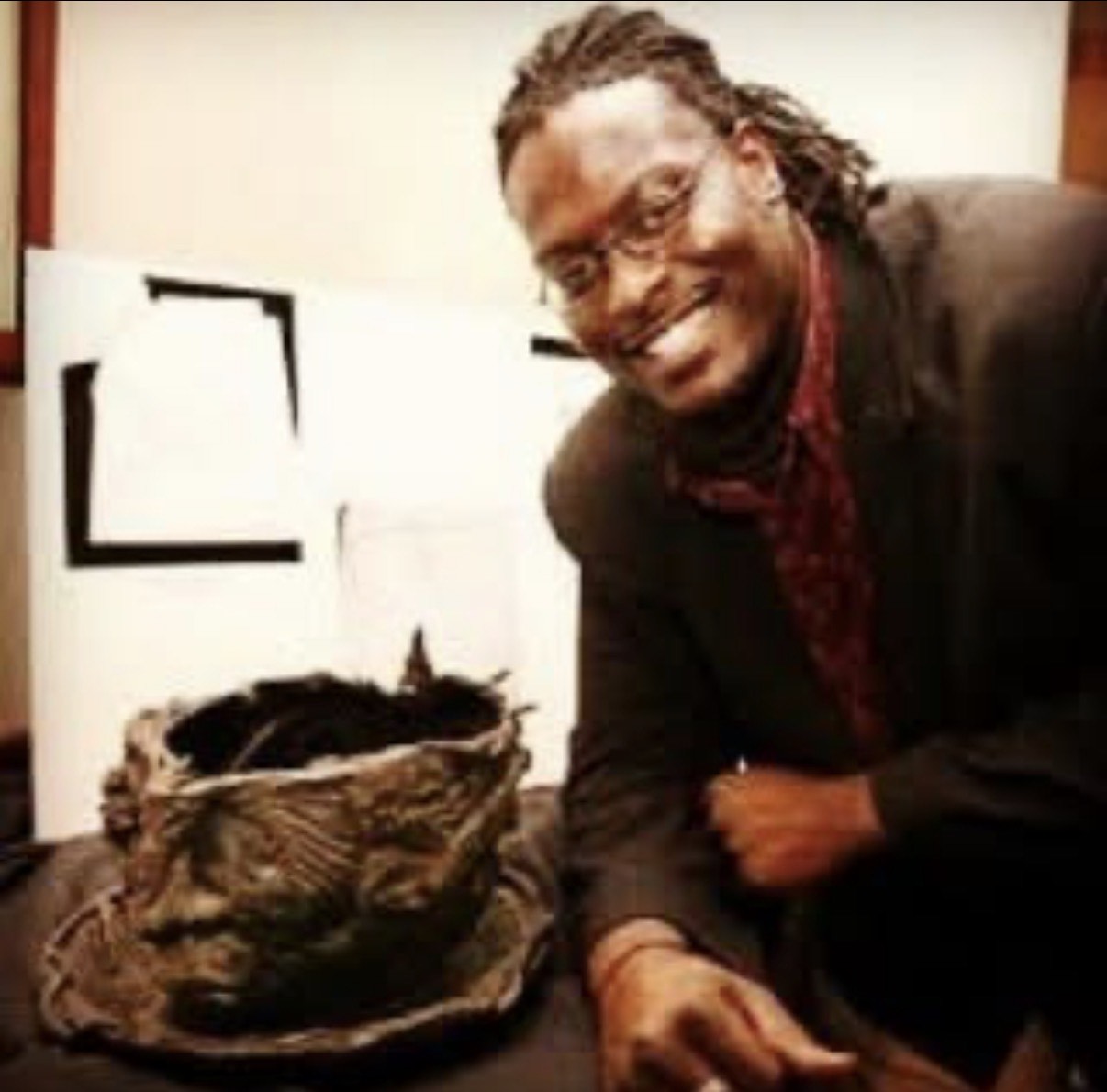
Derrick J. Monk beside a bronze sculpture

The broader legacy

Where history becomes monument.

These works preserve culture in different ways: commemorating civil rights history, honoring civic participation, celebrating intergenerational connection, caring for existing artistic heritage, and bearing witness to difficult historical truths. Together, they define a practice rooted in place, memory, craftsmanship, and community.